RESEARCH PROGRAM
The Reshaping of the Terrorist and Extremist Landscape in a Post Pandemic World
A major research program investigating the impact of COVID-19 on terrorist and extremist narratives.
Program homepage > Restrictions as repression
Narrative #02
Restrictions as Repression
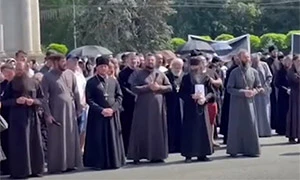
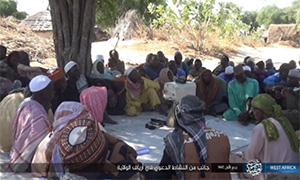
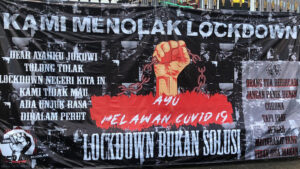
Societal divisions and polarization around the world intensified during the pandemic. Government measures introduced to reduce the spread of the pandemic – including lockdowns, face masks, and limits on public gatherings – faced heavy criticism and public backlash. VEOs in the regions studied continually expanded their narratives to exploit these sentiments and rally against restrictions. Often their framing sought to warrant a broader anti-government stance or to advance views that specific religious groups were being unjustly targeted. In their view, restrictions in the aims of public health became repression.

Reading Progress
About this narrative



Footnotes
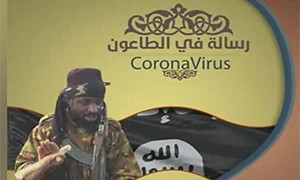
Unmasking Boko Haram, (2020). Boko Haram – Abubakar Shekau Audio Message on Coronavirus – April 15, 2020 [online video], Presenter Abubakar Shekau, Lake Chad Area, 2020 (accessed 12 October 2021). Translation from Hausa to English by authors.
Boko Haram, “This is our Eid Video”, (accessed 1 June 2020).
J. Zenn, “Unmasking Boko Haram: Exploring Global Jihad in Nigeria,” (multimedia supplement).
J. Campbell, “Boko Haram’s Shekau Labels Anti-COVID-19 Measures an Attack on Islam in Nigeria,” Council on Foreign Relations [website] (accessed 18 October 2021)
R. Haula, COVID -19 Pandemic and Al Shabab’s Operations, Nairobi, Kenya, BRAVE Insight, 2020; M. Oduor, ‘Al-Shabaab issues warning against AstraZeneca vaccine’, Africanews (31 March 2021), accessed 20 October 2021.
P. Stošić, ‘Covid-prosvjedi dali su ekstremnoj desnici priliku života’, Index.hr, 3 December 2021, (accessed 15 January 2022);
Armand Ali, Facebook (accessed 23 September 2021).
’Rights and Freedom Initiative’, Facebook (accessed 15 July 2021).
D. Vulcan, ‘Piața Victoriei, protest care contestă existența cazurilor de coronavirus. Se cere pedepsirea celor care au instituit starea de urgență’, Europa Liberă Romania, 15 May 2020, (accessed 15 October 2021).
E. Isaila‚La AUR, nu demonstraţiile împotriva măștii și vaccinului sunt problema, ci extremismul și violența’, Spotmedia.ro, 22 December 2021, (accessed 5 January 2022)
“Protests continue in Serbia against pandemic curbs,” Andalou Agency, 2020.
Digi24, ‘Preoți ai bisericii subordonate Rusiei au organizat un protest anti-vaccinare la Chișinău’, Digi24, 3 August 2021, (accessed 25 October 2021); Radio Europa Libera, ‘ Protest al preoților și enoriașilor în centrul Chișinăului: „Nu trebuie să fim vaccinați cu sila. Dați-ne libertate!”’, Facebook, 3 August 2021
Digi24, ‘Purtătorul de cuvânt al Patriarhiei s-a vaccinat împotriva Covid-19. Bănescu: Pledez pentru informarea credincioșilor de către preoți’, 5 April 2021, Digi24, (accessed 28 October 2021)
Explore the other narratives

Explore the regions